Wastewater
Waste Water Treatment
Jefferson Force Main Extension
History of Wastewater Treatment Plant
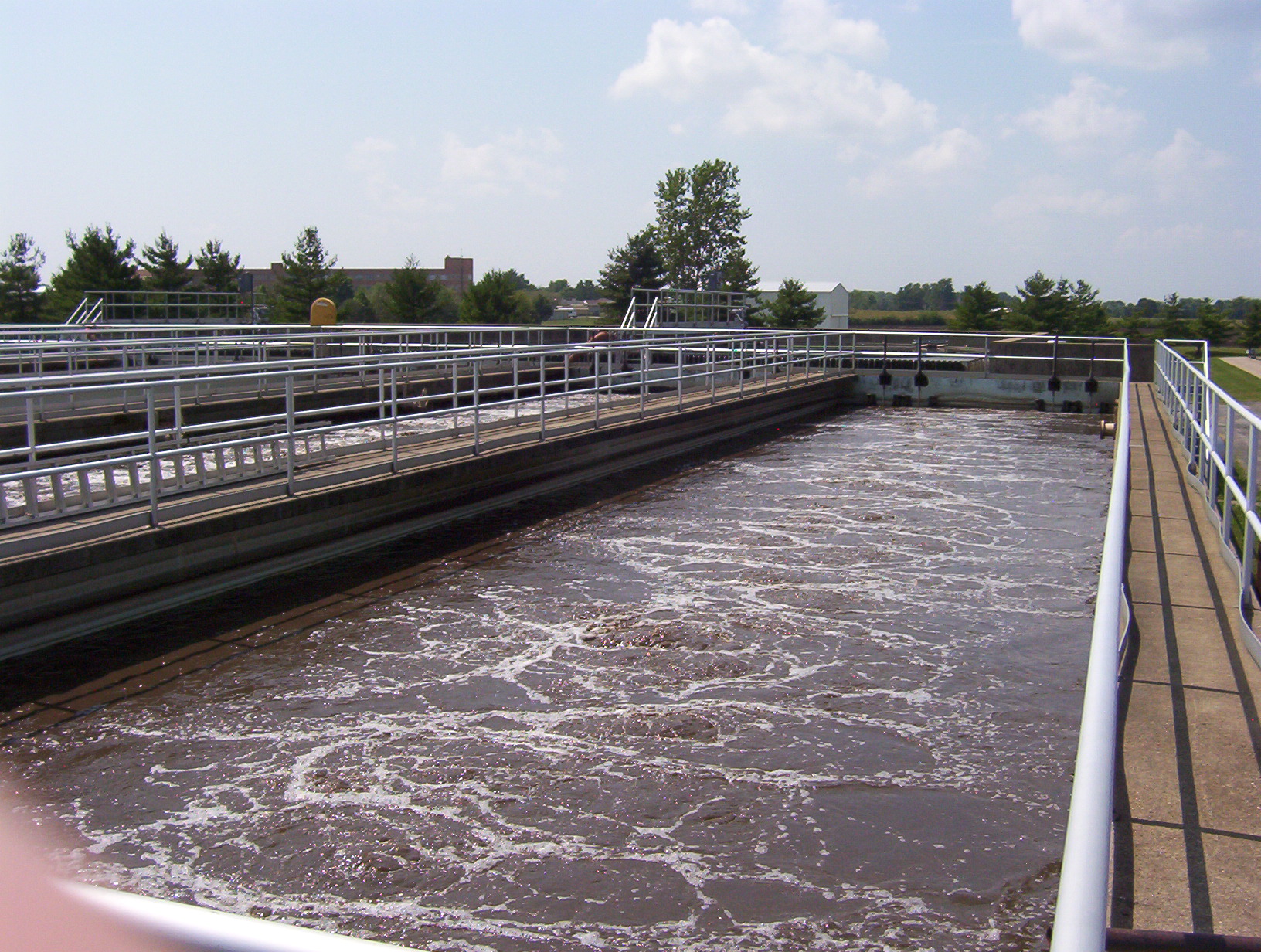
The original Frankfort wastewater treatment plant was built in the late 1920s. We have records that date back to 1929. We are the seventh oldest treatment plant in Indiana. The original plant, by today’s standards, was crude. But in its day, it was state of the art. The Sewage Works as a whole has had five major expansions over time. The first was in 1956. The plant was upgraded and sewers were extended into several areas around town. The next was in 1968 and again the plant was expanded and the Del-Monte lagoons were built. Also in 1968, more sewers were installed throughout the city. There was also a major lift station installed at the end of Kyger Street to service the industrial park and the main sewer that runs west on State Road 28 was installed. The next was in 1978. Improvements were made to the treatment plant, and lift pumping stations were added in the Maish Road area and at the end of Alhambra Avenue. Also a new main sewer interceptor running through the City was installed in the bank of Prairie Creek. In 2012, anaerobic Bio-Solids digesters were rebuilt, plant influent screens were added, and a combined sewer overflow disinfection tank was installed to treat excess flow from heavy rains. A new chemical building was added to accompany the disinfection tank. The chemical building houses liquid bleach and sodium sulfite storage tanks and chemical feed pumping equipment. In 2021/2022, a major plant upgrade was completed to double the plant flow capacity from 4.6 million gallons per day to 9 million gallons per day. The new plant treatment design included Biological Nutrient removal (BNR) which promotes the reduction of ammonia and phosphorus in the treated wastewater flow prior to discharge into Prairie Creek. Also added in the upgrade were four new plant influent pumps, two new secondary clarifier tanks, four tertiary cloth filters, a Bio-Solids digester boiler/heat exchanger, a rotary sludge thickener, a sludge dewatering centrifuge, and a long-term Bio-Solids storage building.
The operation of the plant is 24 hours per day, 7 days per week, 365 days per year. All employees are trained as maintenance operators. Employees can perform any tasks that are presented to them. Maintenance and repairs on equipment is done in-house. Operators are also trained to perform daily lab tests. Indiana Department of Environmental Management (IDEM) requires that we monitor plant treatment performance and the discharge of local industries into the City sewer system (Industrial Pretreatment Program). Finally, we land apply for agricultural beneficial reuse, all of the anaerobically digested Bio-Solids removed from the treatment process.
Contact Us
Superintendent Wastewater Treatment & Sewer Maintenance
- Business: (765) 659-4741
- Staff Directory